What is padel? A beginner's guide
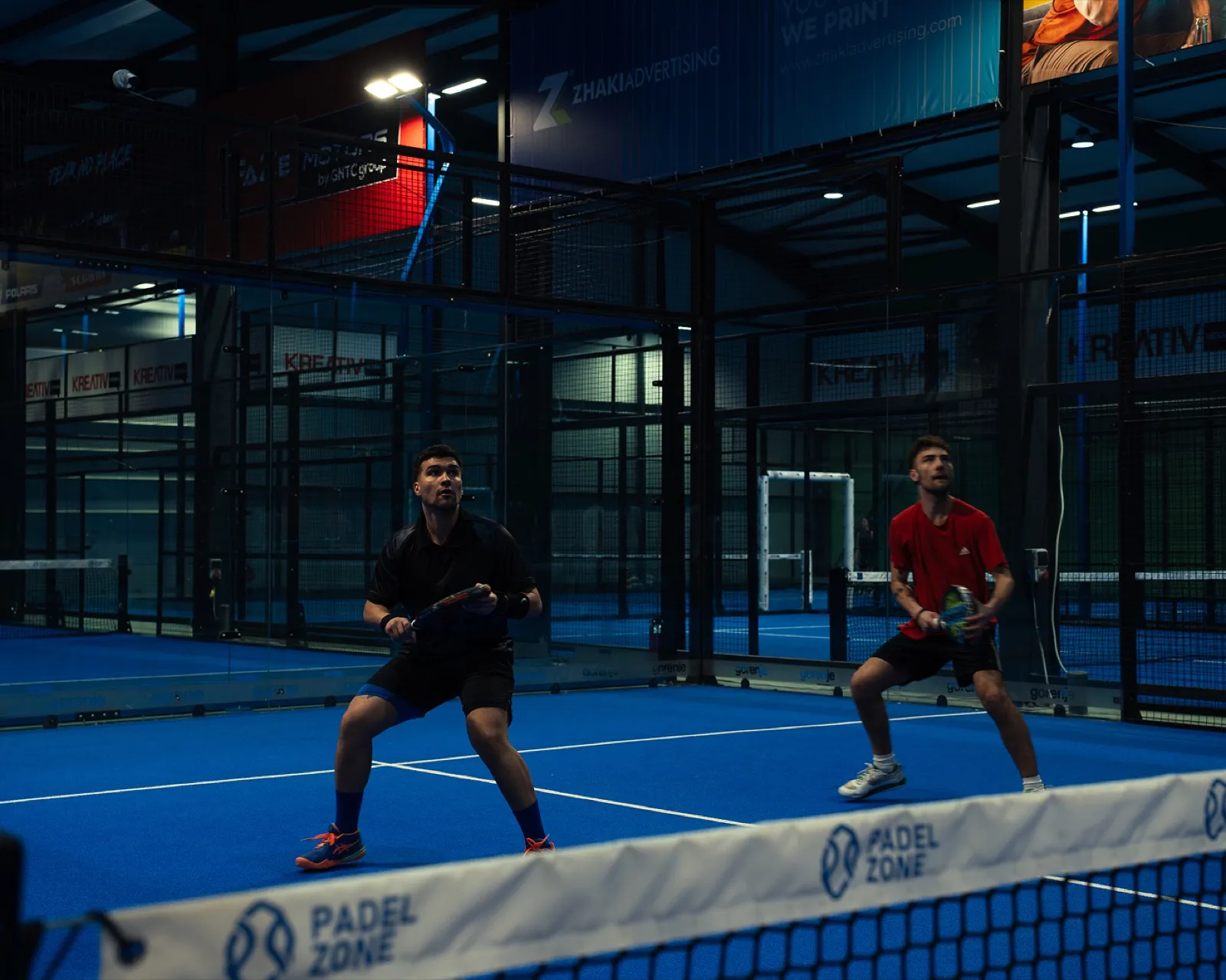
Padel is a racket sport played two against two on an enclosed court about a third the size of a tennis court. The court is surrounded by glass walls and mesh fencing, and the ball stays in play after it bounces off them. You serve underarm, the scoring runs 15, 30, 40, game, and most people manage a real rally within their first ten minutes.
That last part is why the sport has grown so quickly. Padel is genuinely easy to start and takes a long time to master, which means a complete beginner and a regular player can share a court and both enjoy the game.
It started because a wall was in the way
Padel was invented in Acapulco in 1969. Enrique Corcuera wanted a court at his house and didn’t have room for a full-size one, so he built a smaller one and walled it in to stop the ball disappearing into the garden. Rather than treat the walls as an obstacle, he wrote them into the rules. Almost everything that makes padel fun today came out of that compromise.
A few years later a Spanish friend of his, Alfonso de Hohenlohe, played on that court, liked it, and built the first two courts in Europe at the Marbella Club. From there it spread through Spain’s coastal resorts and, not long after, to Argentina, which is why the two countries have produced most of the sport’s best players ever since.
Why it spread faster than anyone expected
The International Padel Federation was founded in 1991 and the first world championship followed a year later. For a long time after that, padel stayed mostly a Spanish and Argentine sport. The last decade changed that completely: it is now one of the fastest growing sports in the world, with new clubs opening across Europe and the Gulf, and a professional tour that fills arenas.
The reasons are always the same wherever it lands. A court is small and cheap to build compared to tennis. It is always doubles, so a session brings four people together instead of two. And the walls keep the ball alive, so a first-timer gets long rallies rather than a string of short, discouraging points.
Things that surprise people
- The rackets have no strings. A padel racket is a solid, perforated bat, shorter than a tennis racket and much easier to control.
- The walls are not out of bounds. Once the ball has bounced on the floor on your side, it can come off the glass and you can still play it.
- You can leave the court. If a ball goes out through the side opening and you can reach it, you’re allowed to run out and play it back in.
- Power loses points. Anything hit hard and flat comes straight back off the glass to your opponent, so control beats strength almost every time.
- The court is 20 by 10 meters, roughly a third of a tennis court, which is why you don’t have to be fast to cover it.
How a point works, briefly
The serve is underarm and has to bounce once before you hit it. You serve diagonally into your opponent’s service box, and you get two attempts. From there it’s doubles rallying: the ball may bounce on the floor once and then off any wall, it may not bounce twice on the floor, and it may not hit the fence or glass on your own side before crossing the net.
That’s close to everything you need for a first game. The rest is in our beginner rules guide, and you can borrow everything else you need at the desk.
Where to play padel in Prishtina
We’re Padel Zone, near Marigona Residence in Fshati Preoc, just outside Prishtina. We opened in 2025 with eight indoor courts and we’re open every day from 11:30 to 23:30.
If you’ve never played, the easiest starting points are a court with three friends, a lesson with one of our coaches, or the Sunday Americano at 19:00, where partners rotate through the evening so you can turn up alone. Kids can start too: our junior academy trains on Wednesdays and Fridays and takes players from age 6 to 16.
Watch it on court
Keep reading
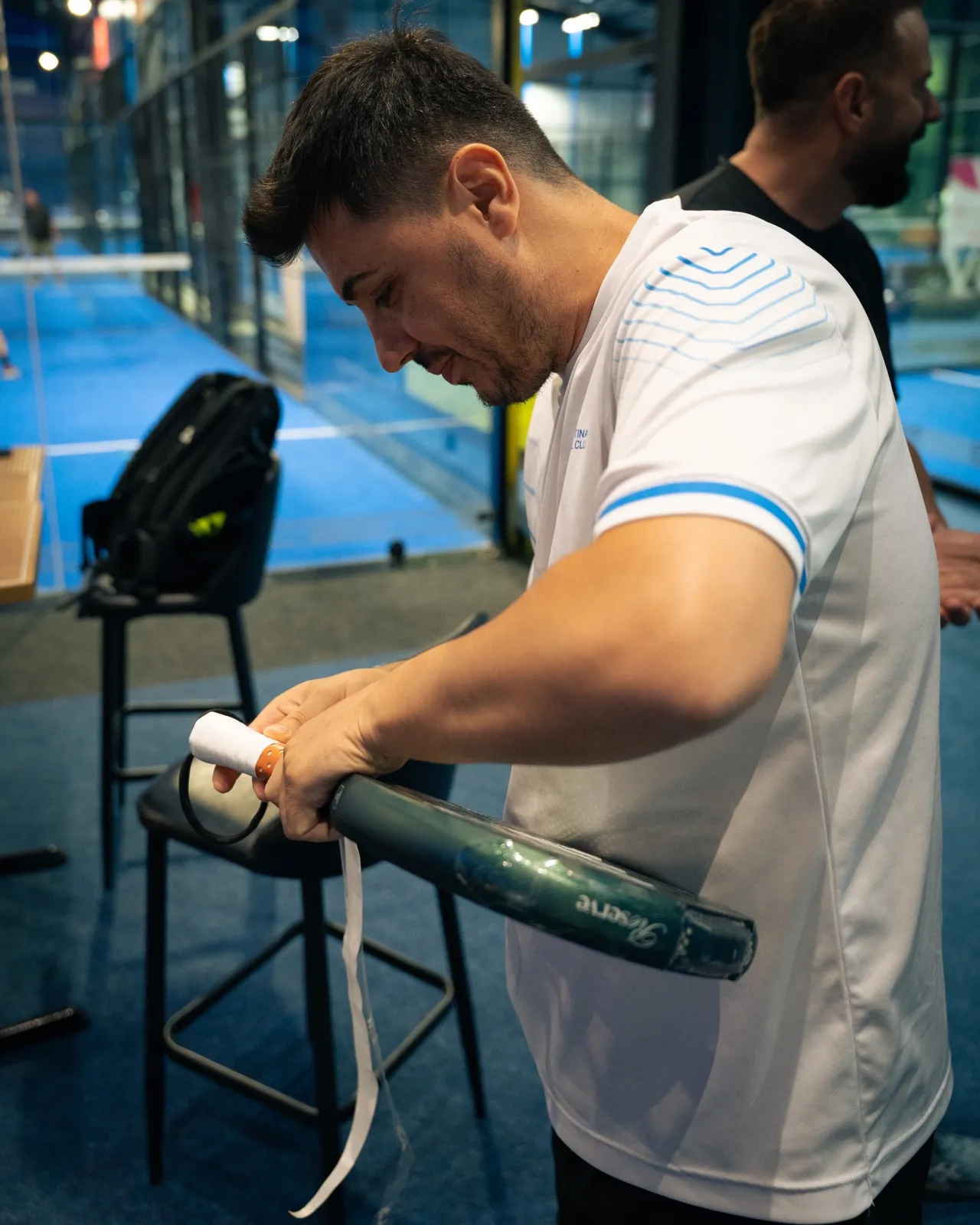
Your first padel session: what to bring
What to wear, what to bring, and what happens when you walk in. Rackets and balls are at the desk, so you need less than you think.
Read →
Padel rules for beginners, explained simply
The serve, the walls, the scoring and the few rules that actually matter in your first game. Everything else you can pick up on court.
Read →